

This short essay series is inspired by my work on affordable housing policy and development.
Essay Two: Too Much & Not Enough
TLDR: We have a surplus of housing that people can’t afford alongside a shortage of what they can.
~ ~ ~
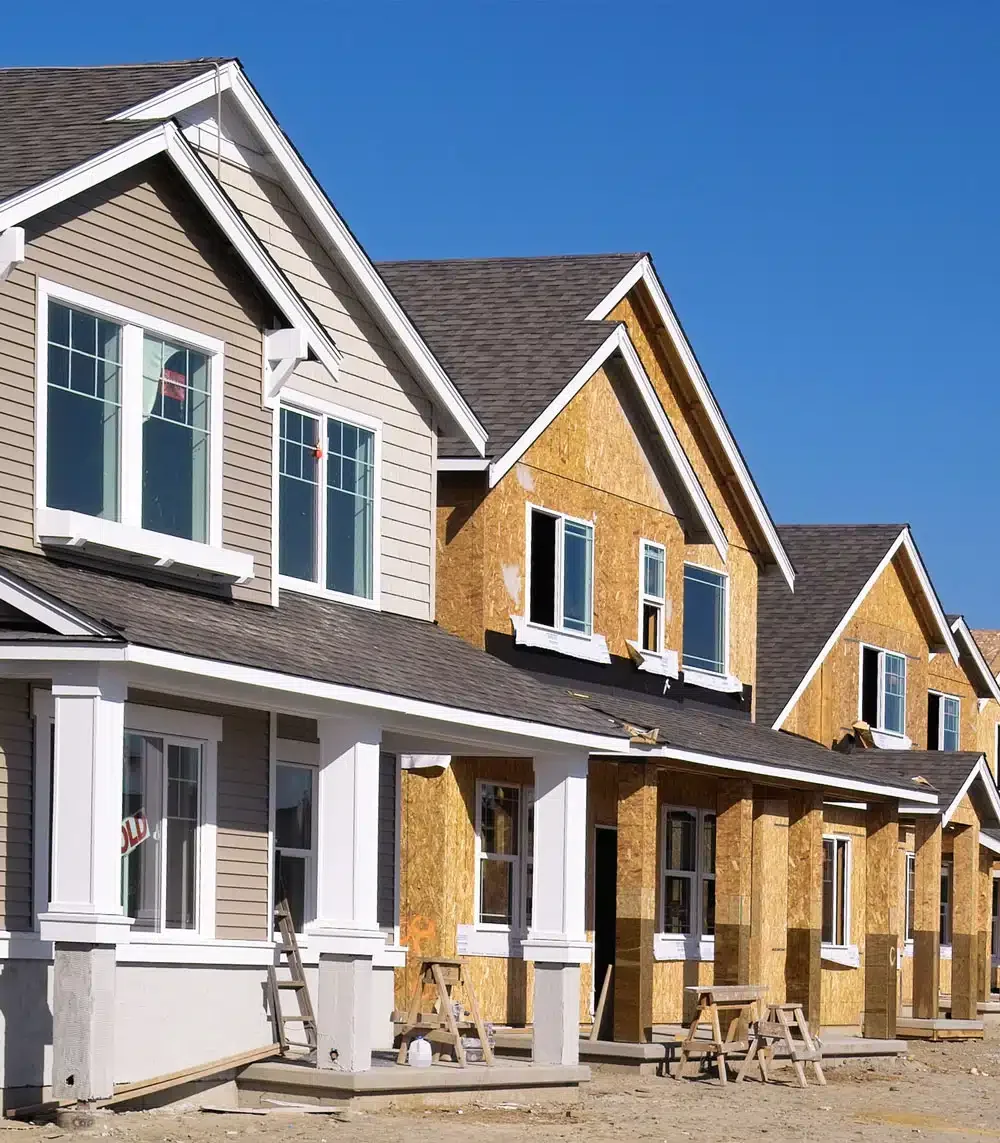
Spectrum of completion
Today, 113,000 brand new homes sit completed and unsold.
This is about double the post-recession average, and reflects the tidal swirl of supply, demand, and affordability. It’s easy to understand the fervor of spec builders answering the call to build and then holding onto a target price, and it’s easy to imagine that people are reluctant to pay record high prices with a high interest rates, especially for tract housing that struggles for character and charm.
Today, 370,000 houses are in the pipeline, unfinished and unsold. This reflects 256,000 under construction and 114,000 units prepped but not started - all unsold. Overall, we see a cooling market and, tragically, a loss of labor due to a terrorized workforce, both foreign-born and not. According to HousingWire, “It would be one thing if immigration enforcement were merely reducing the availability of construction workers. What’s now becoming clear is that an industry already struggling to sell homes may be unable to reliably finish the homes it has invested so much upfront capital in.”
Source: REI Prime, Oct 16. 2026
Today, realtors are reporting record low ‘pending’ home sales. This reflects uncertainty between buyers and sellers, and perhaps, friction between the seller's perspective that their home is still worth well beyond its value. It’s hard to let go of the idea that you missed the payout when everyone else’s property doubled in value the last 5 years. After all, “what the market can bear” is based upon what the last neighbor got.
Today, builders are expressing record low ‘confidence’ for the market of newly built single family housing. The last time it sank this low was June 2012. Rising rates, immigration enforcement and gas prices are cited as the primary causes.
Today, 1.1 million homes are for sale. This reflects about 0.75% of the overall housing units in the United States and a historically low level of established units for sale. Where would the sellers move to, anyway?
Today, 15 million existing homes sit empty. This reflects everything from second homes to abandoned homes, foreclosed and seasonal rentals. At least one-third of these vacant homes are stalled in a legal proceeding, estate settlement or needs repairs.
Given these data, simply building more units appears to be a misaligned solution to the problem of not enough affordable housing. What we actually seem to have is a surplus of what people can’t afford alongside a shortage of what they can. Maybe someone should tell our politicians?
We’ve been told (Smart Cities, KTSM, NAHB, Whitehouse) for years by pundits and politicians of all stripes that we must lift regulations and free up developers to build more housing in order to solve the “affordability crisis”. Of course, this solution offers politicians an extremely convenient answer to the number one concern of their constituents.
As we can see, the “build-our-way-out-of-it” market-based solution is insufficient if not hollow, a fabrication driven by the usual suspects and those of obvious issues of self-interest from those who greatly profit (in the short-term) from deregulated markets. And unfortunately, there are too many politicians and journalists going along with this solution without receiving critical questions from people who should know better… looking at you, Ezra Klein.
Prepare to get wonky.
The call to unlock development does nothing to guarantee affordability, nor does it address the labor issues that are plaguing residential construction. People do need affordable housing. The point is that their solution won’t reach them.
Occasionally, my sanity is graciously restored by others far smarter than I (NYT, Georgetown) who also see the fallacy in simply building more as the solution. Johannes Wieland of the Federal Reserve Bank is one such voice and last year he finished a study for Stanford on the mismatched notions of affordability and supply, writing, “Our conclusions challenge the prevailing view of local housing and labor markets and suggest that relaxing regulatory housing supply constraints may not materially affect housing affordability.”
Thanks for reading.